
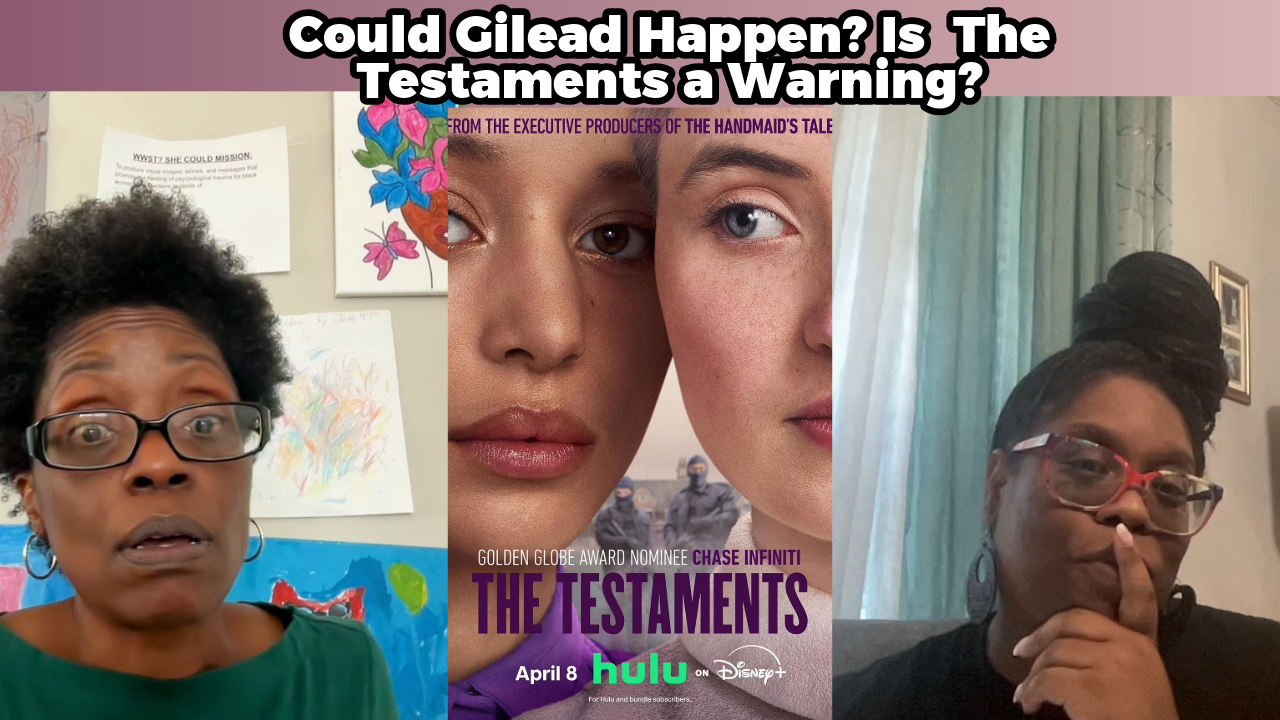

The world of Gilead is a place no woman would ever want to inhabit. A form of gender-based slavery, it serves as a chilling reminder of what can happen when people accept the dangerous fantasies and lies of those who seek power and control.
Author Margaret Atwood gave readers two remarkable works: The Handmaid’s Tale and The Testaments. While she has written many acclaimed novels, these two stories have become cultural forces, especially through their television adaptations.
Unlike The Handmaid’s Tale, which centers on the suffering and exploitation of women forced to serve Commanders and their wives, The Testaments broadens our understanding of life in Gilead. In The Handmaid’s Tale, we witness the horrifying consequences of a society that values women primarily for their reproductive abilities. We also see the damage that occurs when some women choose to support or benefit from oppressive systems rather than challenge them.
The wives of the Commanders enjoy certain privileges, but those privileges come at a tremendous cost. Having no political power, no meaningful autonomy, and facing punishment for acts as simple as reading hardly seems like a fair trade for social status. While watching The Handmaid’s Tale, I often found myself wondering why more of the Commanders’ wives did not fight to dismantle the system. Yet Gilead functions much like a cult, and understanding the power of indoctrination helps explain why so many remain complicit.
The Testaments offers a different perspective. While The Handmaid’s Tale asks how a society could descend into such oppression, The Testaments asks how those ideas are sustained and passed on. The story focuses on the indoctrination of young girls raised within Gilead, girls who never question their circumstances because they have never known anything else.
The customs depicted in the novel—such as the father-daughter dances and the ceremonial “tea” gatherings—echo certain traditions that still exist today. Their similarities to modern debutante culture made me wonder how seemingly harmless gendered traditions can reinforce expectations about women’s roles. Could some of these practices, when taken to an extreme, help create the conditions for a society like Gilead? The thought is unsettling. It feels as unimaginable as believing slavery or the Holocaust could somehow return, yet history reminds us that societies can move backward as well as forward.
Gilead may be fictional, but I believe Atwood wrote it as a warning—a warning against romanticizing the past. It reminds us of a time when women were denied not only certain careers but also opportunities to learn, participate in public life, and think independently. There are certainly people who long for a return to systems where power was concentrated in the hands of a few and where their authority went unquestioned.
Atwood’s stories challenge us to remain vigilant. To assume that everyone supports equality, or that something like Gilead could never happen, is naive. The true power of these novels lies in their ability to make us examine the present, question the structures around us, and consider what kind of future we are creating for ourselves and our daughters. No woman should ever find herself at the mercy of people who view her as less than fully human.
Ride or Die Review: Octavia Spencer, Friendship, Risk & Starting Over – What Was She Thinking
- Ride or Die Review: Octavia Spencer, Friendship, Risk & Starting Over
- The Dutton Ranch Season 1 Episodes 5–9 Review | Family Secrets, Betrayal & Ending Explained
- Dutton Ranch Episodes 1–4: Faith, Family & Resilience
- Is God Is: Motherhood, Vengeance, and the Power of Mothers
- Margo's Got Money Troubles Review: OnlyFans, Motherhood & Stigma – Part 2