
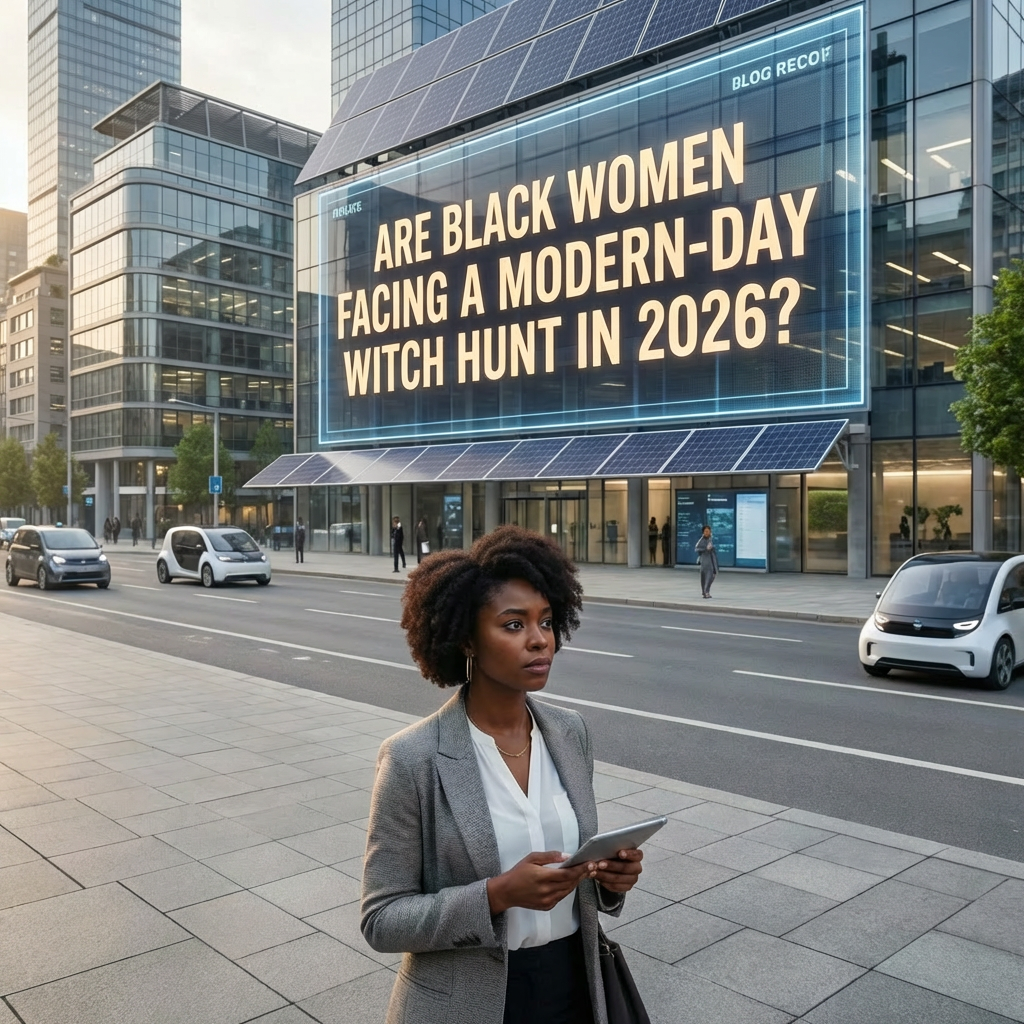
Could the recent uptick in removing women of color from positions of power—positions of thinking, leading, and influence—really be a coincidence?
In my African American Studies courses, I learned that advancement in the U.S. often follows a predictable pattern: white men are given access first, followed by Black men, then white women, and finally Black women. With that framework in mind, I watched the 2024 presidential election closely. Would Black women disrupt this long-standing pattern? Would they achieve something even white women had not yet accomplished?
It turns out, the prediction held.
History shows that when women challenge the status quo, there is often a backlash. What we are seeing now—the quiet but noticeable pushing out of women of color from positions of power—feels eerily similar to modern-day witch trials. Women of color have long fought to dismantle harmful stereotypes like the “welfare queen,” pursuing education and professional excellence. Yet despite these efforts, our contributions are still treated as expendable.
As noted in Witch hunts everywhere: a feminist re-mapping of misogyny and contemporary anti-witch violence, “witch hunts are not episodic aberrations but enduring, adaptable machines of gendered governance. Across labour regimes, digital spaces, medical imaginaries, carceral systems, and welfare states, the figure of the witch emerges as a weapon through which women are rendered dangerous, deviant, or undeserving—and through which patriarchal, racialized, and capitalist power is normalized.”
The data reflects something deeply concerning. Between February and July 2025, Black women lost 319,000 jobs across both private and public sectors, largely due to mass layoffs in education, healthcare, and housing. During that same period, white women gained 142,000 jobs, Hispanic women gained 176,000 jobs, and white men gained 365,000 jobs.
Something is clearly amiss.
So the question becomes: are Black women being punished for aspiring to lead? For believing we are capable of holding the highest levels of power? For refusing to remain confined to roles historically assigned to us?
Perhaps.What matters most is awareness. Because when we recognize these patterns, we understand that it is not a lack of capability holding us back—but the presence of systemic forces pushing us out. And as history has shown time and again, we will do what we have always done: she will find a way back in.