
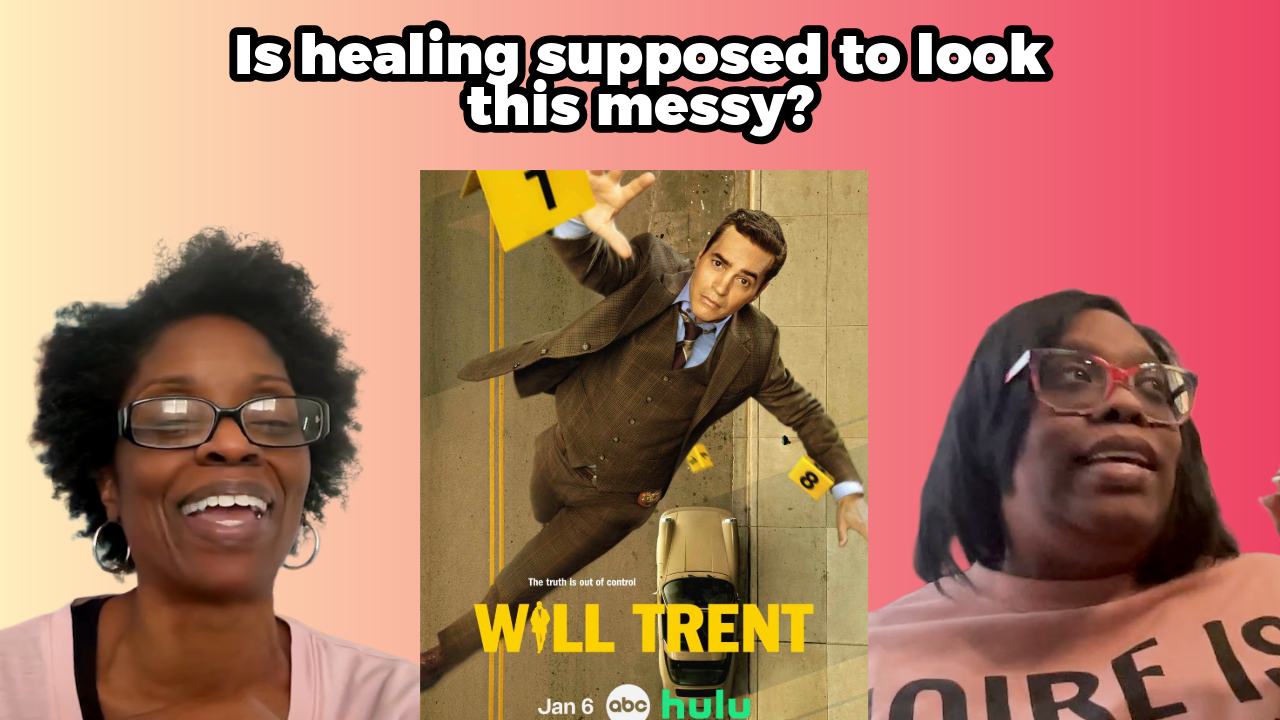
Is Angie carrying Will’s baby, and we just don’t know it yet?
Is Will losing his grip on reality now that therapy is cracking open old wounds?
A new season of Will Trent is here—and I am very much here for it.
I’ll admit, it took me a minute to fall in love with the show. But one weekend, I followed the ads’ advice (honestly, great job by the marketing team) and gave it a try. I was hooked almost immediately. I fell in love with the characters, and with a trend I’m really enjoying right now in TV and film: stories where women are in positions of leadership and are also the ones saving themselves when things fall apart.
The series opens with Sonja Sohn’s character, the GBI Deputy Director and undisputed boss, coming to retrieve Will Trent to solve a major case. While the show is technically a procedural, what keeps me watching isn’t the crimes—it’s the emotional throughline. The series is deeply invested in the trauma of Will and his co-dependent trauma partner, Angie. Their constant confrontation with old wounds is far more compelling to me than who committed what crime.
To me, Will Trent is a reminder of how easily we can sabotage our own healing. Will is surrounded by people who genuinely love and care for him, yet he struggles to accept that love. His rigid way of seeing the world—right versus wrong, black versus white—often keeps him stuck. This season, though, therapy enters the picture. As Will begins to address his trauma, it feels like the writers are intentionally blurring those moral lines, raising the question: does healing sometimes destabilize us before it saves us?
That’s another reason I’m drawn to shows like this. The best ones force you to self-reflect, to see your own wounds mirrored back at you.
As a woman of color, there’s a voice in my head I’m constantly negotiating with—a voice that questions my self-worth. Do I belong here? Do I deserve this? For a long time, I didn’t think I listened to it. I told myself it was just normal self-doubt. But lately, I’m realizing that reality doesn’t lie. Patterns don’t lie. When you repeatedly accept treatment that doesn’t align with what you believe you deserve, eventually you have to admit there’s a common denominator—and something has to change.
Otherwise, you risk ending up like Will: standing in the middle of a room, talking to yourself, surrounded by people trying to help you process trauma you’ve avoided for far too long. And I don’t want that.
I appreciate shows like this—stories where the writers trust the audience to wrestle with everyday emotional truths. I’m looking forward to seeing how Will navigates his healing this season… and whether Angie and Will are really done for good.